
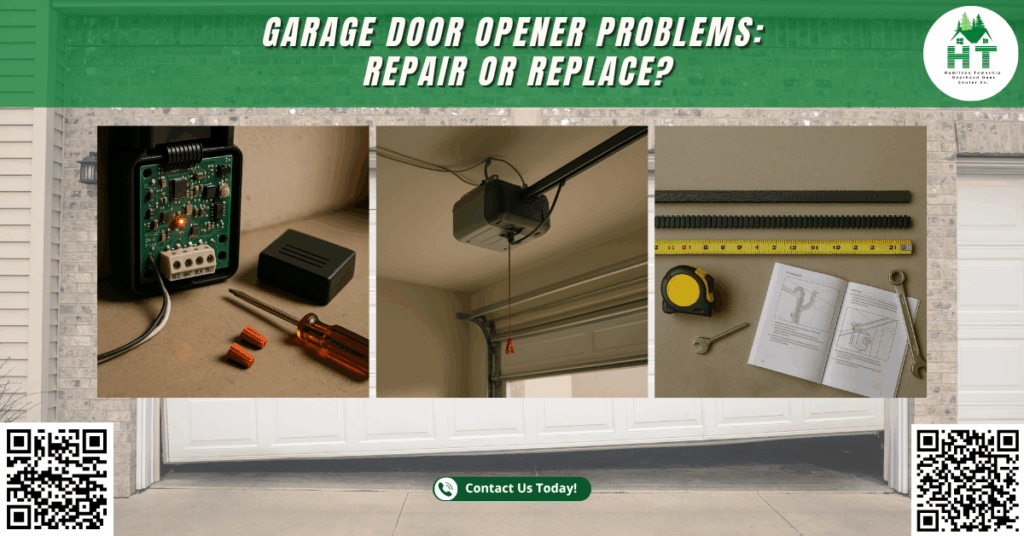
Your garage door opener is the small machine that makes a big difference in your day. When it works, you press a button and roll out to school, work, or errands without thinking twice. When it fails, your schedule stalls, and safety can be at risk. At Hamilton Township Overhead Door Center Co., most first-time callers ask the same question right away. Do I need a garage door repair, or should I replace the opener altogether? It is a smart question that can save money, reduce stress, and keep your home secure.
Here is a quick story from a recent service call. A homeowner in Eatontown told us the door stopped halfway every evening. Our technician performed a thorough inspection, checked the spring balance, tested the down force, and found a small belt drive tension issue and a failing limit switch. The repair took one visit and cost far less than a new motor head. The door now runs with smooth operation, and the family avoided a late-night lockout. Situations like this show why careful diagnosis matters before you spend on a replacement.
Consider this useful statistic. For many homes, the garage is the main entry. That means your opener often works more times each day than your front door lock. More cycles mean more wear on parts like gears, sprockets, limit switches, sensors, trolleys, and belts or chains. Understanding the warning signs, the quick fixes, and the true end-of-life indicators will help you choose the right path with confidence.
How a Garage Door Opener Works in Plain Language
Think of your opener as three systems working together.
- First is the motor unit. It powers the lift and controls the logic board.
- Second is the drive system. It is the chain, belt, screw, or direct drive that pulls a trolley along the rail.
- Third is the safety and control system. This includes photo eye sensors, wall control, remotes, keypad, and travel or force limits.
You press a button on the wall or the remote. The logic board wakes the motor. The drive moves the trolley. The trolley moves the door along tracks while the door’s springs carry most of the weight. Sensors make sure nothing is in the way. If any of these parts are out of balance or out of spec, the door may stop, reverse, strain, or make loud noises.
A garage door opener does not lift the whole weight of the door. Correct spring tension is the backbone of safe operation. If the springs are weak or broken, even a new opener will struggle. This is why a professional diagnosis always includes a spring and balance check before any opener work begins.
Early Warning Signs You Should Not Ignore
The door will not open or close
If the lights flash and the door refuses to close, sensors may be misaligned or dirty. If the motor hums but the trolley does not move, a travel gear may be stripped or the trolley may be disconnected. If there is no response at all, power supply or the logic board may be the issue. A quick reset or a part swap can often restore normal operation.
Loud noises or shaking
Grinding, clanking, and rattling suggest worn internal gears, a loose chain, a bent rail, or worn rollers. Some noise is normal. New or extreme noise is a red flag. Ignoring it can turn a small repair into major damage.
Constant reversing
If the door begins to close and then pops back up with no obvious reason, it may be force setting or travel limit related. It may also be a sensor alignment issue. Both can be corrected during a tune-up and do not always require parts.
Slow movement or weak lift
A slow door can point to a lack of lubrication, worn bearings in the motor, worn rollers on the door, or spring issues. A precision check by a skilled technician separates opener problems from door hardware problems.
Intermittent operation
Sometimes it works, and sometimes it does not. This may be radio interference, a failing receiver, a wall button short, or low batteries in the remote or keypad. It may also be a logic board that is failing with heat and time.
Repair vs Replace: A Simple Decision Framework
Use this step-by-step approach before you buy a new unit.
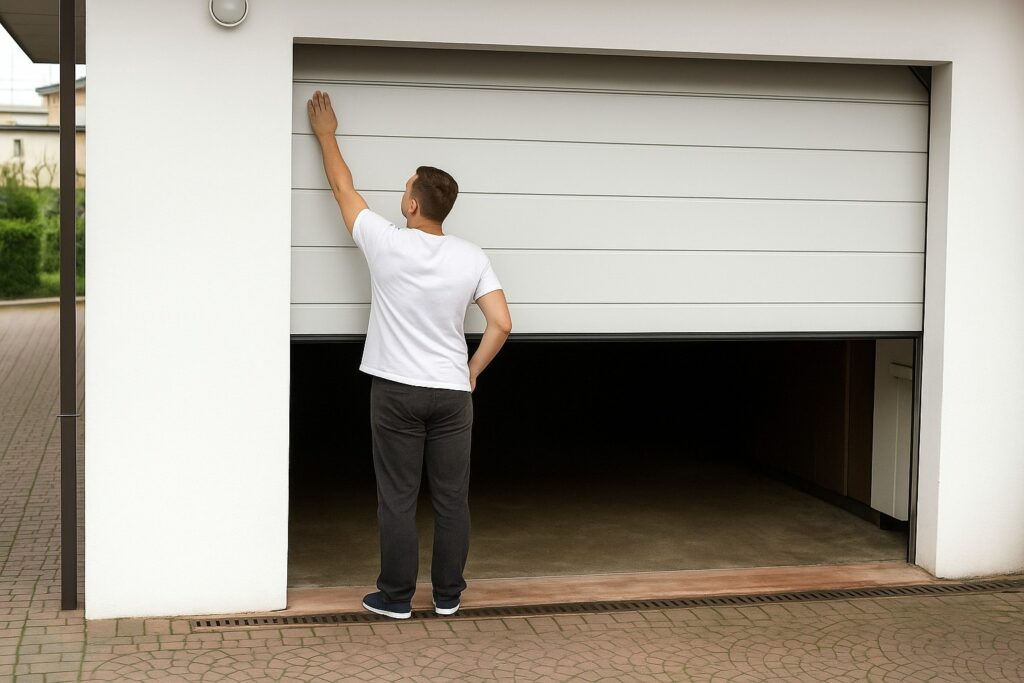
- Check the door balance first – Pull the red release cord with the door in the down position. Lift the door by hand to chest height and let go carefully. If it stays in place, the springs are likely balanced. If it falls or shoots up, spring tension needs professional attention. Opener problems often start with a door imbalance.
- Confirm the obvious – Replace remote and keypad batteries. Make sure the opener is plugged in. Inspect the GFCI outlet. Clean the sensors with a soft cloth. Make sure nothing bumps the sensors during lawn work or kids’ play.
- Test the safety reversal – With the door open, press close and lightly push up on the bottom of the door as it begins to come down. The door should reverse with very light resistance. If it does not, call for service right away.
- Note the age and brand – Opener age matters. Units under eight years old with a clear, single fault are often good candidates for repair. Units older than ten to fifteen years with repeated faults are usually better to replace.
- Count the failures – One failed gear or a loose chain is simple. Three or more failures in a year point to the end of life. Replacement saves time and money over the next few years.
- Evaluate features you want – New garage doors and new openers offer battery backup, smartphone control, soft start and soft stop operation, motion-sensing lights, and stronger security with rolling codes. If you want these features, replacement delivers real everyday value.
Common Repairs That Make Sense
Sensor cleaning and realignment
Dust, leaves, and road salt film can block the photo eyes. A soft cloth and a minor alignment fix the issue quickly. We also secure the sensor brackets so they do not move each time a trash can bumps them.
Drive belt or chain adjustment
A slapping chain or a chirping belt means slack. Adjusting tension and lubricating the rail quiets the system and reduces wear on the sprocket and trolley.
Main drive gear kit
In many chain and belt drive motors, the nylon worm gear wears down after years of use. Replacing the gear kit is a cost-effective repair that can add years of service to a well-kept opener.
Limit switch or travel module replacement
If your door stops short of the floor or the header, the travel sensor may be dirty or failing. Replacing this small part restores precise travel and prevents sudden reversals.
Capacitor replacement
If the motor hums but does not start, the start capacitor may be weak. Swapping it can bring the motor back to life without replacing the entire head.
Remote, keypad, and wall control fixes
Reprogramming remotes, changing batteries, and replacing worn wall buttons solve many intermittent problems. We also check the low-voltage control wires for staples through the insulation, which can short the circuit.
These focused repairs are quick, practical, and budget-friendly when the rest of the system is healthy.
When Replacement Is the Smart Choice
The opener is truly old
Once an opener reaches ten to fifteen years of regular use, internal wear builds up. Replacement brings fresh parts, higher efficiency, stronger security, and less downtime. It also improves resale appeal for your home.
Frequent service calls
If you are calling more than twice a year for the opener itself, the unit has likely reached the end of its reliable life. A new model reduces surprise failures and saves time.
Noisy chain or screw drive with nighttime bedrooms nearby
A modern belt drive or a direct drive opener is far quieter. If a bedroom sits above or next to the garage, this upgrade improves family comfort.
Heavier new garage door
If you upgraded to a new garage door with higher insulation and the opener now strains, a stronger motor with a proper lift rating is the correct match. A correctly matched opener and balanced springs share the work safely.
Safety and smart home features
Smartphone control gives you alerts when the door opens or stays open longer than it should. Battery backup keeps you moving during a power outage. Motion-sensing lights improve safety at night. These are everyday wins that a repair cannot deliver on an older head.
Matching the Opener to Your Door and Your Life
Chain drive
Durable and budget-friendly. Good for detached garages or where noise is not a concern. Regular lubrication keeps it running well.
Belt drive
Smooth and quiet. Best for attached garages near living spaces. A steel-reinforced belt handles daily use with less vibration.
Screw drive
Fast and powerful with fewer moving parts. Performs well in consistent temperatures with proper lubrication.
Direct drive and wall-mounted jackshaft
Very quiet and space-saving. Ideal when ceiling space is needed for storage or when a high lift track is installed.
Our technicians look at your door size, weight, spring system, and track configuration. We also consider lifestyle needs like early morning departures, shift work, and kids schedules. The goal is precise operation with the right parts for your home.
Safety First: What Homeowners Should and Should Not Do
Safe to do
Keep sensors clean. Replace remote batteries. Gently wipe the rail and apply a small amount of garage-approved lubricant where the manufacturer recommends. Test the safety reversal each month. Keep the opener manual in an easy place and review the quick reference page.
Leave it to a trained professional
Spring work, cable replacement, torsion spring adjustments, opener motor repairs, and full installations involve high tension and electrical safety. Untrained repairs can lead to injuries and property damage. Our skilled technicians have the tools, training, and experience to do the job safely the first time.
Real World Examples From Our Service Team
- Weak lift after a storm – A Hamilton Township homeowner called after a thunderstorm. The opener would only move the door a few inches. Diagnosis showed a failed start capacitor and water intrusion at the ceiling outlet. We replaced the capacitor, corrected the outlet box, and added a drip loop to the cord. The system has run strongly for more than a year.
- Random openings at night – An Eatontown family reported the door opening by itself. We traced the issue to a neighbor’s old remote on the same fixed code. We upgraded the head to rolling code security and reprogrammed all remotes and the keypad. No surprises since.
- Noisy operation wakes a sleeping baby – We swapped a chain drive for a belt drive with soft start and soft stop, replaced worn rollers with quiet nylon rollers, and tuned the spring balance. The family noticed the difference the same night.
Cost and Value: What to Expect
Every home and every door is different, but here is a helpful way to think about costs.
- Minor repairs like sensor work, keypad replacement, or chain tension adjustments are typically the most affordable.
- Mid-level repairs like a drive gear kit, travel module, or capacitor replacement are still economical when the unit is under eight years old and otherwise healthy.
- Full replacement, including professional garage door installation of the new opener, becomes the best value when the unit is older, noisy, or unreliable, or when you want smart features and battery backup.
We provide clear written estimates before any work. You choose the path that fits your needs, your budget, and your timeline.
Maintenance That Extends Opener Life
A little care prevents big headaches.
- Lubricate moving points twice a year using a garage-approved product on hinges, rollers, and the opener rail where the manufacturer recommends.
- Tighten hardware on the door and bracket connection points. Vibration can loosen bolts over time.
- Keep tracks clean by wiping away dust and debris. Do not apply heavy grease to the tracks.
- Test the balance every few months and call if the door does not hold position at halfway.
- Schedule a yearly tune-up with our team for a thorough inspection, force and travel checks, sensor tests, and a written condition report.
Regular maintenance reduces costly repairs and supports smooth operation for years.
Features To Consider If You Choose a New Opener
- Battery backup keeps you moving during outages.
- Wi-Fi connectivity and app control send alerts, allow remote closing, and create guest access.
- LED lighting and motion sensors improve safety and energy efficiency.
- Soft start and soft stop reduce wear on parts and keep noise down.
- Automatic deadbolt locks add security for some wall-mounted models.
We install trusted brands and match features to your daily routine. Tell us what matters to you, and we will guide you to a clear choice.
Commercial Doors and Access Systems
Many businesses in Hamilton Township rely on commercial garage doors, rolling steel doors, sectional doors, and gates. Openers for these systems are built for higher cycle counts and require regular maintenance. Our team services photo eyes, edges, loop detectors, wall stations, and safety brakes. We schedule service around your business hours to reduce downtime. If your operation depends on timely deliveries or secure overnight storage, a preventive plan and a fast response partner are essential.
We also support access control for gates, including keypad updates, receiver upgrades, and secure remotes. If your gate needs a reliability check or your parts inventory is thin, we can help you plan so you avoid surprise failures.
What To Expect During a Service Visit
- Friendly arrival and safety review – We greet you, verify concerns, and make sure the door area is clear and safe.
- Thorough inspection – We examine springs, cables, rollers, hinges, tracks, opener mounting, rail alignment, sensors, and all controls. We document the current condition.
- Clear explanation – We show you what we found, explain options in simple terms, and answer questions. You decide on repair or replacement once you feel informed.
- Professional work – Our service man or service team performs the agreed work with precision. We use high-quality parts and follow manufacturer specifications.
- Final testing and cleanup – We test the operation several times, set correct open and close limits, verify force settings, and confirm the safety reversal. We tidy the area and provide tips for maintenance.
- Written summary – You receive a summary of work completed, parts used, and any recommendations to keep your system in top shape for years.
Practical Tips You Can Use Today
- Keep a spare remote battery in a kitchen drawer for quick swaps.
- Label the wall control with the learn button steps. A simple sticker saves time if a remote loses its programming.
- Periodically vacuum cobwebs near sensors and the opener light lens. Clear lenses help sensors and lighting work well.
- Teach kids never to play with the remote or hang from the door.
- If you hear a new sound, record a short video on your phone. Sharing the sound with our team speeds diagnosis.
- If you are leaving on vacation, use the lock feature on the wall control if your opener offers it. This blocks remote signals and adds peace of mind.
The Bottom Line
If your garage door opener shows one clear symptom, is under eight years old, and your door is balanced, a targeted garage door repair is often the smartest move. If your unit is older, noisy, unreliable, or missing features you want every day, replacement delivers better value and fewer headaches. Either way, the next right step is a careful inspection that puts your safety and budget first.
Frequently Asked Questions (FAQs)
1. How long does a professional garage door opener installation take?
A typical garage door opener installation takes about two to three hours for a standard residential setup. More complex installations, such as those involving heavy doors or ceiling modifications, may take slightly longer to ensure safety and precision.
2. Can I use my old remote with a new garage door opener?
In most cases, older remotes are not compatible with new openers due to updated security codes and frequency technology. However, universal remotes or new remotes programmed by your technician can easily solve this issue.
3. What type of opener is best for an insulated or heavy garage door?
For heavier or insulated doors, a belt-drive or direct-drive opener with a ¾ to 1¼ horsepower motor is recommended. These models provide strong, quiet performance and are built to handle the added weight efficiently.
4. How can I extend the lifespan of my garage door opener?
Performing annual maintenance, keeping the tracks clean, and lubricating moving parts are key steps. Also, schedule a professional inspection once a year to identify early signs of wear before they turn into costly repairs.
How Can Hamilton Township Overhead Door Center Co. Help You?
Hamilton Township Overhead Door Center Co. is ready to help with fast, friendly, and professional service. Our skilled technicians handle everything from simple opener adjustments to full new garage door opener installations. We provide residential and commercial solutions, thorough inspection, routine maintenance services, precision repairs, and clear guidance so you always know what you are paying for and why.
Address: 2010 Genesee St, Hamilton Township, NJ 08610
Phone: (609) 460 3556
What we do today: Garage door repair, garage door services, garage door openers, garage door installation, spring repair, cable repair, sensor alignment, keypad and remote programming, commercial garage door maintenance, inspection and safety testing, and emergency service when you need it.
How to get started: Call, text, or contact us online to schedule your appointment. Tell us your questions, your concerns, and your timeline. We will arrive on time, do the job with care, and leave your door running with smooth operation.
If your opener is acting up, do not wait for a complete failure. Reach out today for honest advice and reliable results from your local expert team at Hamilton Township Overhead Door Center Co.